
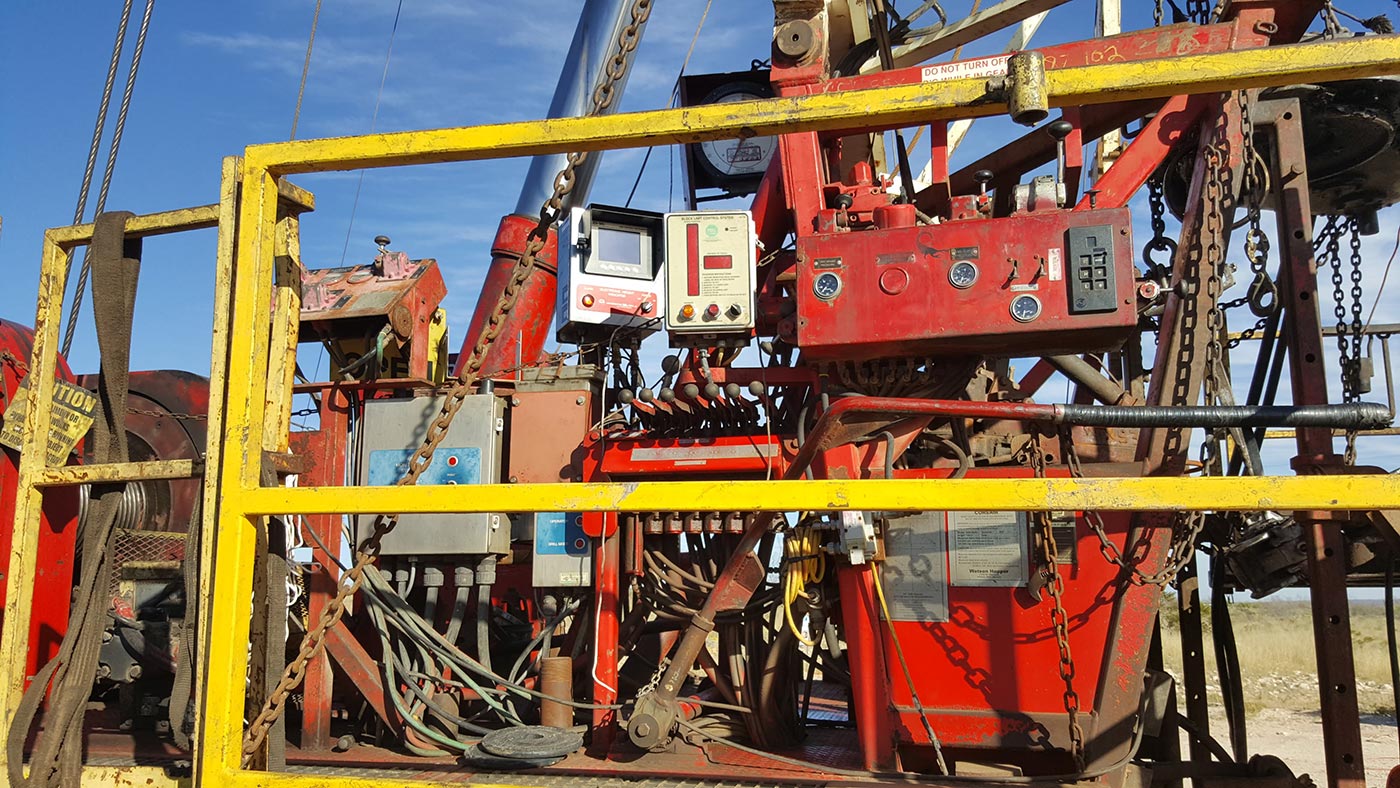
Control Solutions Proven Under Pressure
When it comes to the oil and gas industry, control systems live at the intersection of precision and punishment. Long days, harsh environments, heavy equipment, and high-stakes operations mean there’s no room for failure. Rugged Programmable Controllers (RPCs) are built specifically for these challenges, and their capabilities often go far beyond what most operators expect. Designed for advanced signal processing, their intuitive onboard programming and configurable inputs/outputs support a wide range of measurement types, including tension, torque, weight, and pressure.
Here are five ways RPCs play an integral role in oil and gas:
1. They Excel in Harsh Environments
Temperature extremes, vibration, humidity, and corrosive atmospheres are normal in oilfield operations. RPCs are engineered with sealed enclosures, industrial-grade components, and firmware tested in real-world conditions. They don’t just resist the environment, they maintain accuracy and reliability where others drift or degrade. For especially harsh environments, they can also be used in combination with a range of enclosure accessories.
2. They Speak the Language of Your Equipment
Oil and gas systems rarely operate in isolation. Whether it’s a PLC, SCADA network, or hydraulic control system, the flexible communication protocols of RPCs make integration seamless. This allows operators to consolidate data, reduce hardware redundancy, and streamline remote monitoring.
3. They Enable Smarter, Real-Time Decision-Making
The onboard processing power of RPCs means they can perform complex calculations and trigger control actions instantaneously, all before data ever leaves the site. That’s a big deal for safety-critical operations like drilling tension control, torque management, and winch load balancing.
4. They’re Customizable Without Starting From Scratch
Unlike most controllers that require extensive programming to adapt to new applications, Rugged Controls’ RPCs are modular by design. This means updates for new sensors, control logic, or data outputs can be made quickly, keeping projects on schedule and reducing downtime. The flexible menu system is also designed around creating measurements specific to the application and virtually eliminates the requirement for custom programming.
5. They Future-Proof Your Operation
As automation evolves, so do connectivity standards. The RPC platform was built with scalability in mind, ensuring compatibility with modern data logging, cloud reporting, and remote control systems. They’re not just industrial controllers, they’re a long-term control solution built to evolve with your infrastructure. New models are also always built to be backwards compatible with legacy models.
Built for Tough Business
In the oil and gas industry, reliable control isn’t just about automation, it’s about resilience. Rugged Controls’ RPCs deliver the precision, adaptability, and durability demanded by drilling and lifting environments where downtime isn’t an option. By combining advanced processing with proven field reliability, these systems enable operators to monitor and optimize every aspect of their operation with confidence. From wellhead to winch, Rugged Controls provides the tools that keep energy systems running safely and under control.
To learn more, check out the following model-specific pages for Rugged Controls’ current RPC offerings: RPC-90x-C | RPC-80x
